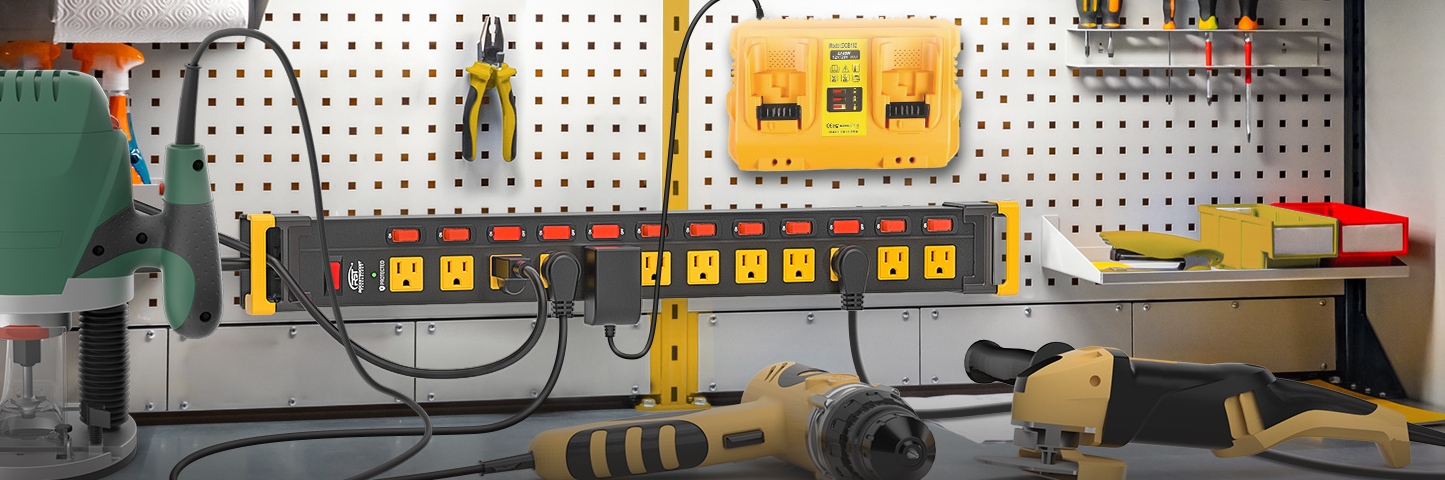
Individual switches
Kill one device without unplugging the rest, and stop standby draw at the source. Lit switches show what's live at a glance.
SHOP SWITCHED STRIPS →Most listings throw numbers at you with no context. This guide decodes every spec — then matches a strip to what you're actually plugging in.
Every legitimate power strip publishes these. If a listing hides one, that's an answer too.
How much surge energy the strip can absorb over its life before it stops protecting. Think of it as a fuel tank for spikes.
The total load the strip can carry. A standard outlet is 15A (≈1875W at 125V). Add up your devices and stay under it.
The thickness of the copper. Thicker wire carries current cooler and safer. Bargain strips quietly use thinner wire.
Not just how many outlets, but how far apart. Wide spacing fits bulky wall-warts without blocking neighbors.
Reach without tension or coiling. Measure the run to the wall before you buy — too short strains the plug, too long clutters.
Built-in USB saves adapters. USB-C with Power Delivery (PD) fast-charges phones and tablets at its rated wattage.
What surrounds live parts. Metal dissipates heat, resists impact, and won't feed a flame the way thin plastic can.
The safety hardware: a real MOV for surges, a thermal cutoff for overheating, and a resettable breaker for overloads.
A spec only counts if it's verified. Numbers like joules and clamping voltage are meaningful when the strip is listed to UL 1449 — see how certification works →
Tap everything you'd plug in — and how many. The rule: total draw stays under the 15A / 1875W rating, and under 80% of it for anything running continuously.
TYPICAL DRAWS — CHECK THE LABEL ON YOUR DEVICE FOR EXACT WATTAGE.
Past the safety basics, these are the differences you'll feel every day — and the ones bargain strips fake or skip.
Kill one device without unplugging the rest, and stop standby draw at the source. Lit switches show what's live at a glance.
SHOP SWITCHED STRIPS →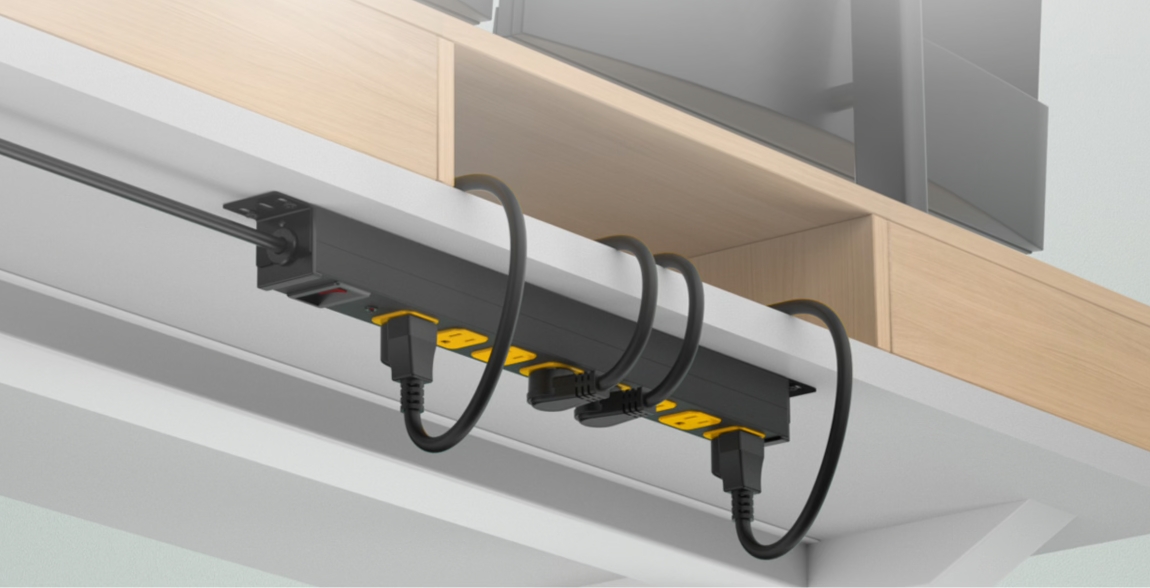
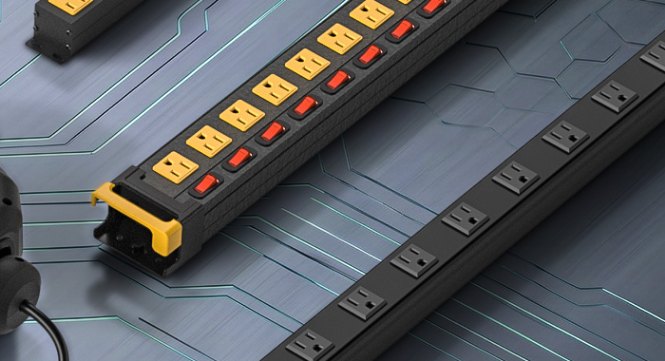
Screw bracket, 3M adhesive, or keyhole — power off the floor and exactly where you work. Essential for benches and garages.
SHOP MOUNTABLE →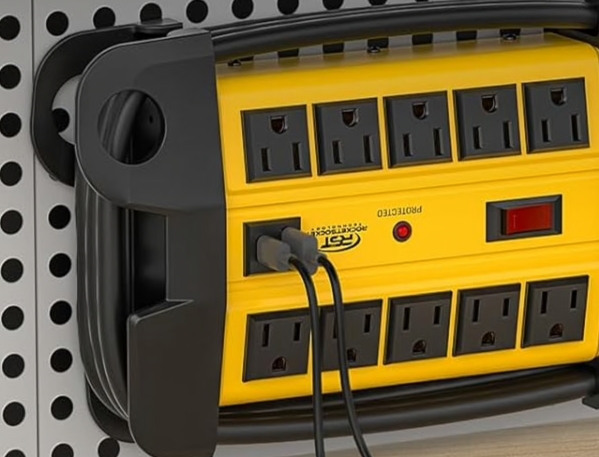
Built-in USB-C PD charges phones and tablets without a wall brick — freeing AC outlets for things that need them.
SHOP USB MODELS →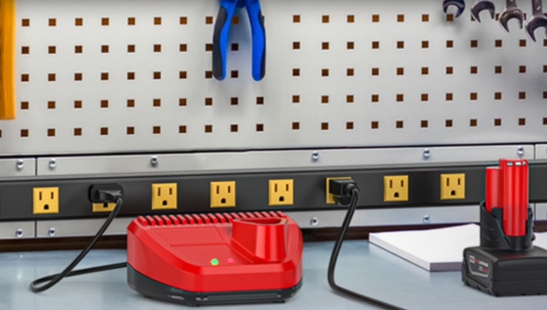
Bulky adapters block neighboring sockets on cramped strips. Wide spacing means every outlet you paid for stays usable.
SHOP SURGE STRIPS →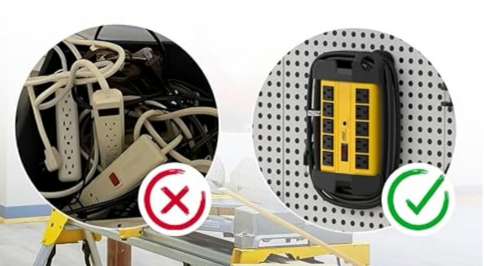
Wrap ears and keepers take up slack instead of leaving it pooled on the floor — fewer trip hazards, less strain on the plug.
SHOP CORD MGMT →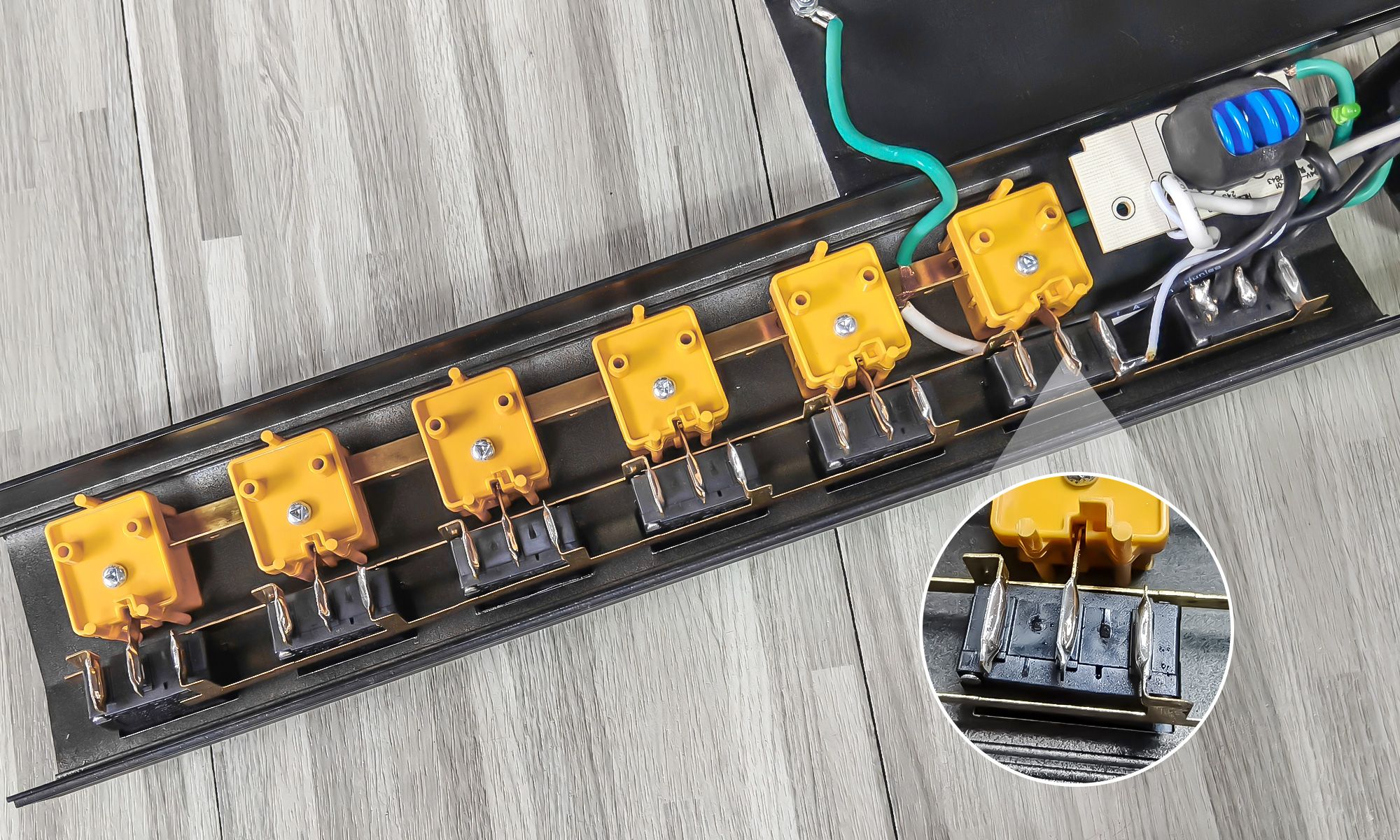
An aluminum-alloy shell shrugs off knocks and heat, and a press-reset breaker turns an overload into a two-second fix.
SHOP HEAVY DUTY →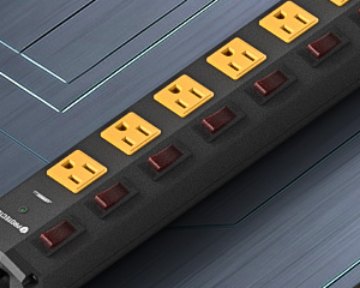 Home office
Our pick6-Outlet + 2 USB Metal Strip
$29.99
Home office
Our pick6-Outlet + 2 USB Metal Strip
$29.99
 Workshop
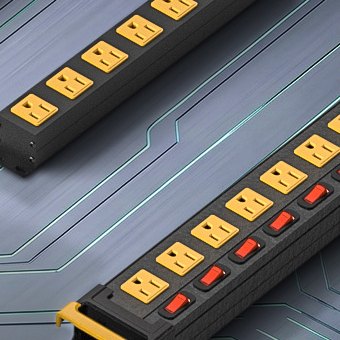 Our pick8-Outlet 4-Way Bracket Mount
$26.99
Our pick8-Outlet 4-Way Bracket Mount
$26.99
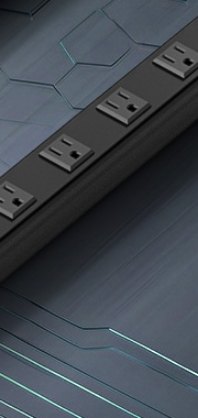 AV / rack
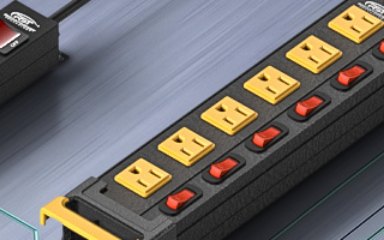 Our pick10-Outlet Surge · 2800J · 15ft
$37.99
Our pick10-Outlet Surge · 2800J · 15ft
$37.99
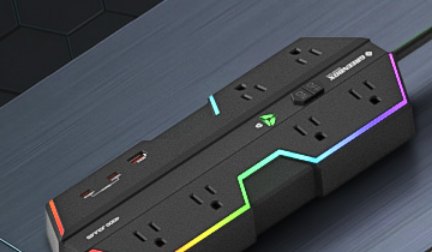 Gaming
Our pickGaming RGB · 6-Outlet + USB-C
$39.99
Gaming
Our pickGaming RGB · 6-Outlet + USB-C
$39.99
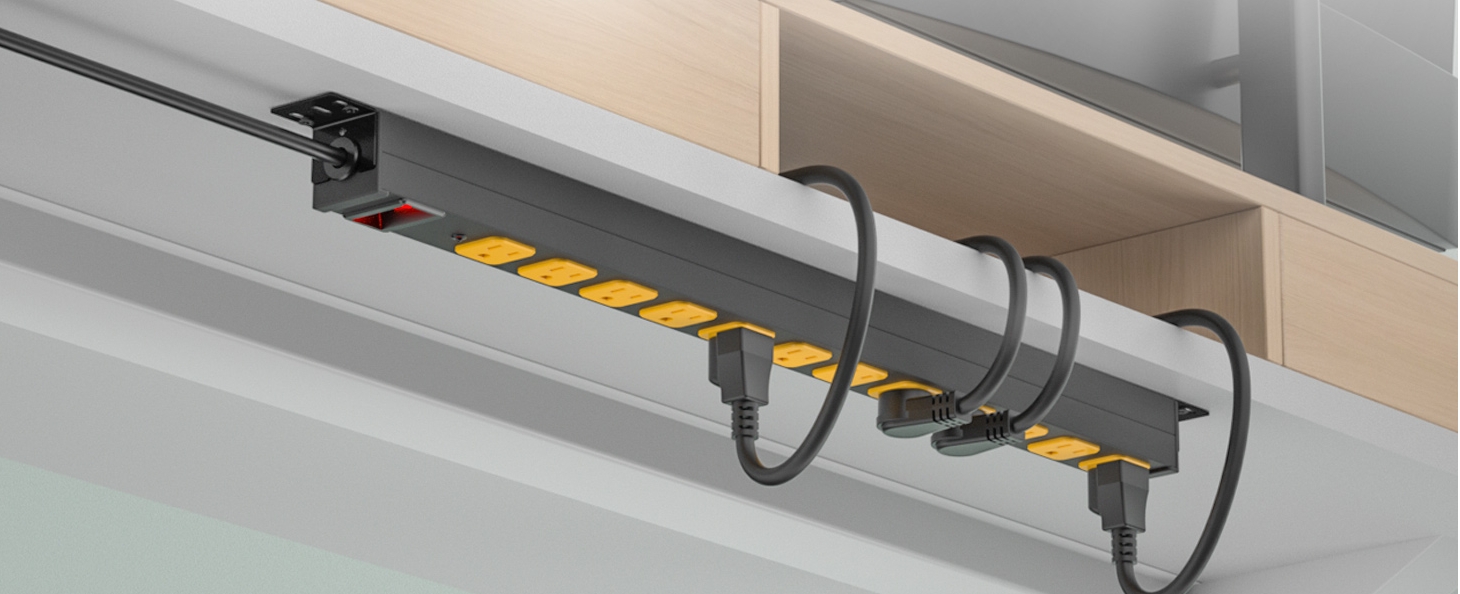 Garage
Our pick12-Outlet Heavy-Duty · 2100J
From $37.99
Garage
Our pick12-Outlet Heavy-Duty · 2100J
From $37.99
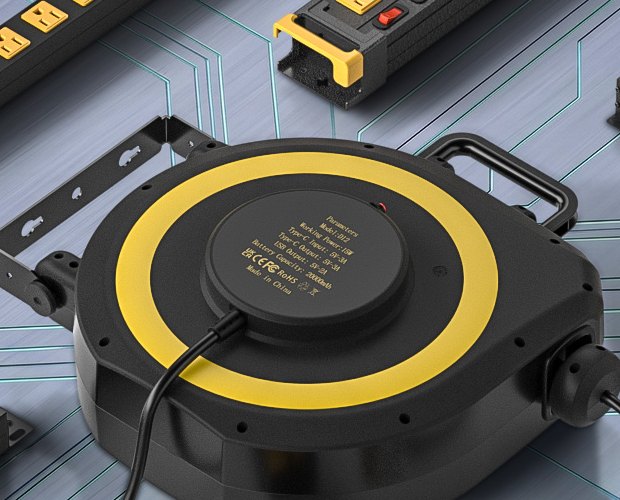 Mobile power
Our pickRetractable Cord Reel · 50ft
$72.99
Mobile power
Our pickRetractable Cord Reel · 50ft
$72.99
Same 14AWG copper and independent certification across the line — what changes is capacity, reach, and features.
| Product | Outlets | USB | Surge | Cord | Mount | Switches | Price | |
|---|---|---|---|---|---|---|---|---|
6-Outlet + 2 USB MetalBest for · Desk |
6 | 2× A | 1200J | 6 ft | Yes | Lit master | $29.99 | |
12-Outlet Metal · 9ftBest for · Most sockets |
12 | — | 1020J | 9 ft | — | Per-outlet | $56.99 | |
8-Outlet 4-Way BracketBest for · Value + mount |
8 | — | 2100J | 6 ft | 4-way | Per-outlet | $26.99 | |
10-Outlet Surge · 2800JBest for · Max protection |
10 | 2× A | 2800J | 15 ft | Yes | Per-outlet | $37.99 | |
12-Outlet Heavy-DutyBest for · Bench & rack |
12 | — | 2100J | 6 ft | Yes | Master + breaker | From $37.99 | |
Gaming RGB + USB-CBest for · Gaming |
6 | A + C | 4000J | 6 ft | — | Master | $39.99 | |
Cord Reel · 50ft · 14AWGBest for · Mobile reach |
— | — | — | 50 ft | 180° swivel | — | $72.99 |
The bottom of the market competes on price by cutting what you can't see. These tells give it away before you buy.
A UL/ETL logo in the listing photos means nothing — the mark must be molded or printed on the strip itself, with a file number you can look up.
If the listing won't state a joule rating — or a clamping voltage — assume there's no real MOV inside. It's a power strip wearing a surge protector's label.
Copper, breakers, and certified MOVs have a real cost. A rock-bottom price is paid for with thin copper-clad aluminum and untested internals.
Gauge is the cheapest spec to print and the most expensive to honor. Silence on AWG almost always means 16AWG or thinner behind a 15A label.
We cut one of each open so you don't have to — see the teardown comparison →
Every CRST product page lists these specs in full — verified, certified, and downloadable. Filter by use case and compare like-for-like.